


Bald eagle
Haliaeetus leucocephalus
At the Detroit Zoo
The Detroit Zoo is home to three rescued bald eagles. Male Flash was found on Kodiak Island, Alaska in September 2008, after suffering a wing injury that prevented him from being released back into the wild. He arrived at the Detroit Zoo in November 2009. Mr. America found sanctuary in November 2017 after he was sent to the Detroit Zoo from a rehabber in Vincennes, Indiana. He sustained a severe wing injury in Huntingburg, Indiana, that also deemed him non-releasable. Female Captain Marvel found sanctuary at the Detroit Zoo in October of 2019. She is believed to have collided with a train in Monroe, Michigan, prior to her rescue. Captain Marvel sustained a severe wing injury, so she couldn’t be released back into the wild. Detroit Zoological Society staff collect the molted bald eagle feathers and provide them to the U.S. Fish and Wildlife Service to be distributed to Native Americans for use in religious ceremonies. The bald eagles can be found in the American Grasslands.
Description
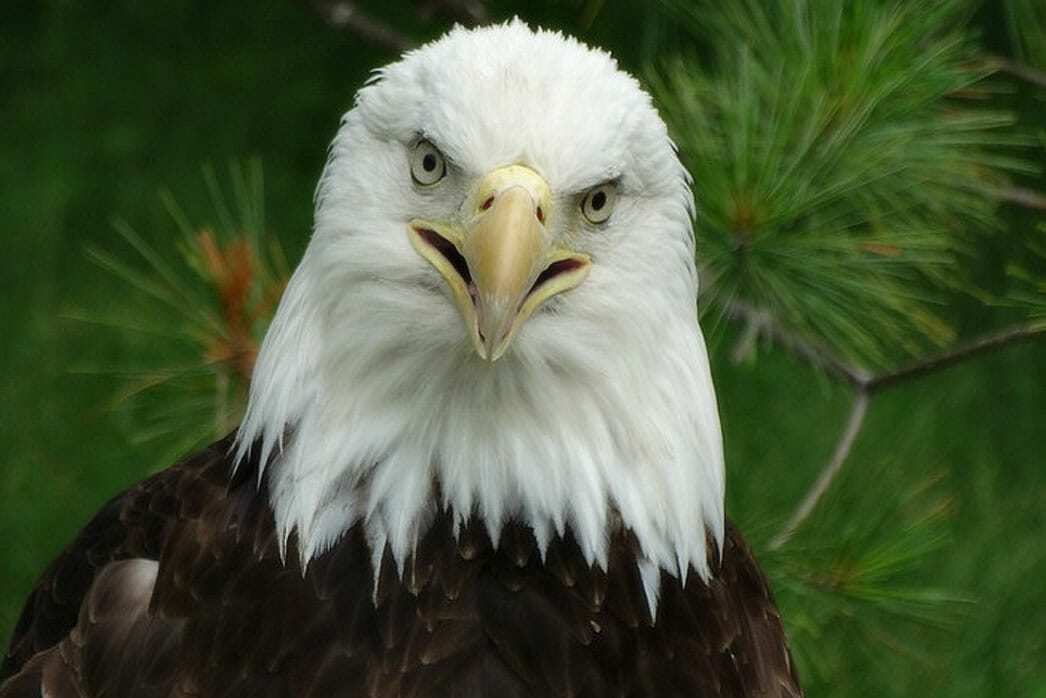
Adult bald eagles have white heads and tails with dark brown bodies and wings. Their legs and bills are bright yellow. Young birds attain adult coloring in about five years.
Fun Facts
-
A symbol of strength and freedom, bald eagles were chosen in 1782 as the National Emblem and are pictured on the Great Seal of the United States.
-
Bald eagles use their feathers to balance. When they lose a feather on one wing, they will also lose a matching feather on the other side.
-
Bald eagles earned their name from the Old English word "balde," meaning white, referring to the distinctive white feathers covering their heads and tails.